


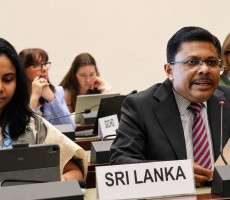
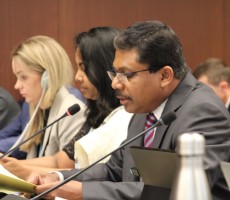
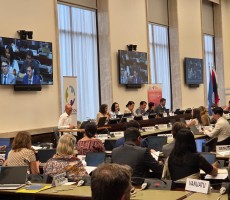
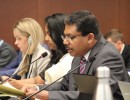

The Permanent Representative of Sri Lanka to the United Nations in Geneva, Ambassador Sumith Dassanayake addressed the Second Preparatory Meeting of the Third Review Conference of the Convention on Cluster Munitions (CCM), on 01 July 2026 at the Palais des Nations, Geneva. In his statement Ambassador Sumith Dassanayake, outlined constructive observations for further improvement of the Zero Draft of the Vientiane Capital Action Plan (VCAP) 2027–2031.


Sri Lanka’s progress in implementing the victim assistance obligations under the Anti-Personnel Mine Ban Convention was presented by Eng. L. Kumudu Lal Bogahawatta, Secretary, Ministry of Housing, Constructions and Water Supply and the Director of National Mine Action Centre at the 2026 Inter-sessional Meeting of the Anti-Personnel Mine Ban Convention on 16 June 2026.

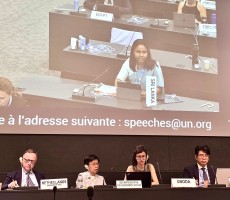
Day 2: Tuesday, 16 June 2026
Session 5 (10:00 – 11:30) The Life Cycle of AI in the Military Domain (Part 2)
As emphasized in our intervention yesterday, Sri Lanka welcomes the focus of Resolution 80/58 on the entire life cycle of Artificial Intelligence capabilities within the military domain. This must encompass every stage: from pre-design, design, development, evaluation, and testing, to deployment, use, sale, procurement, operation, and decommissioning.


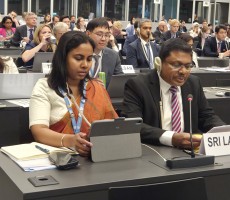

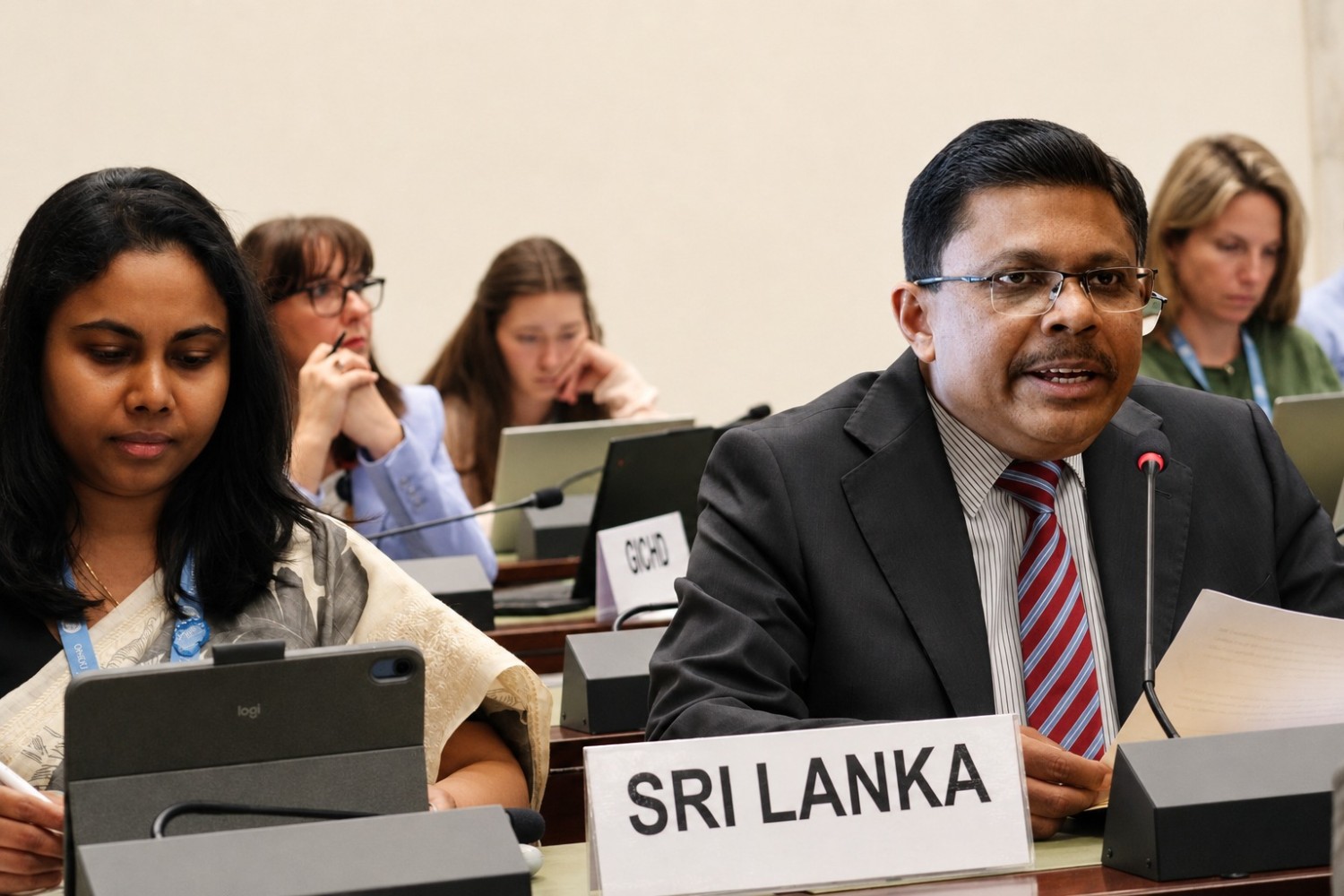
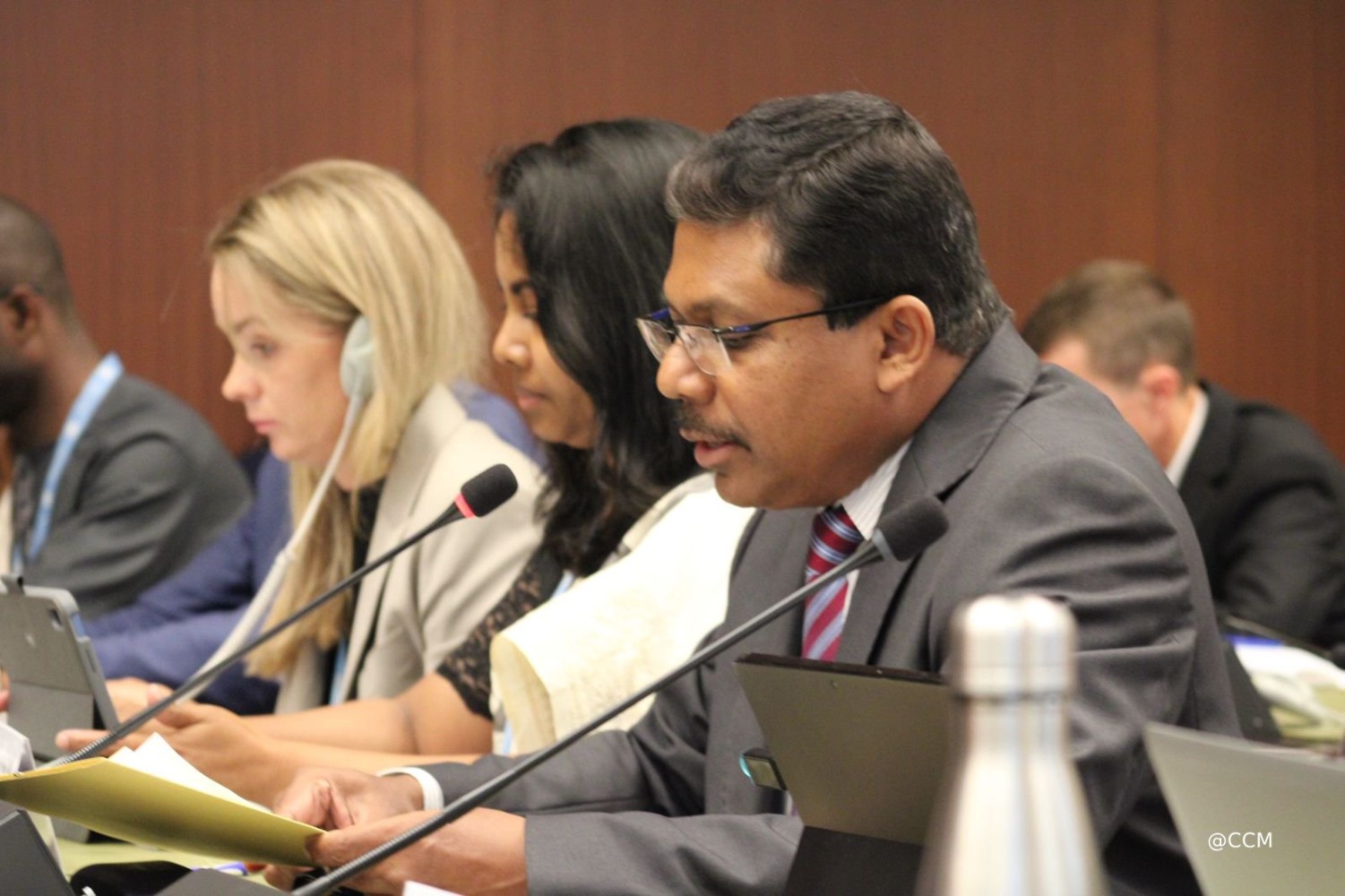
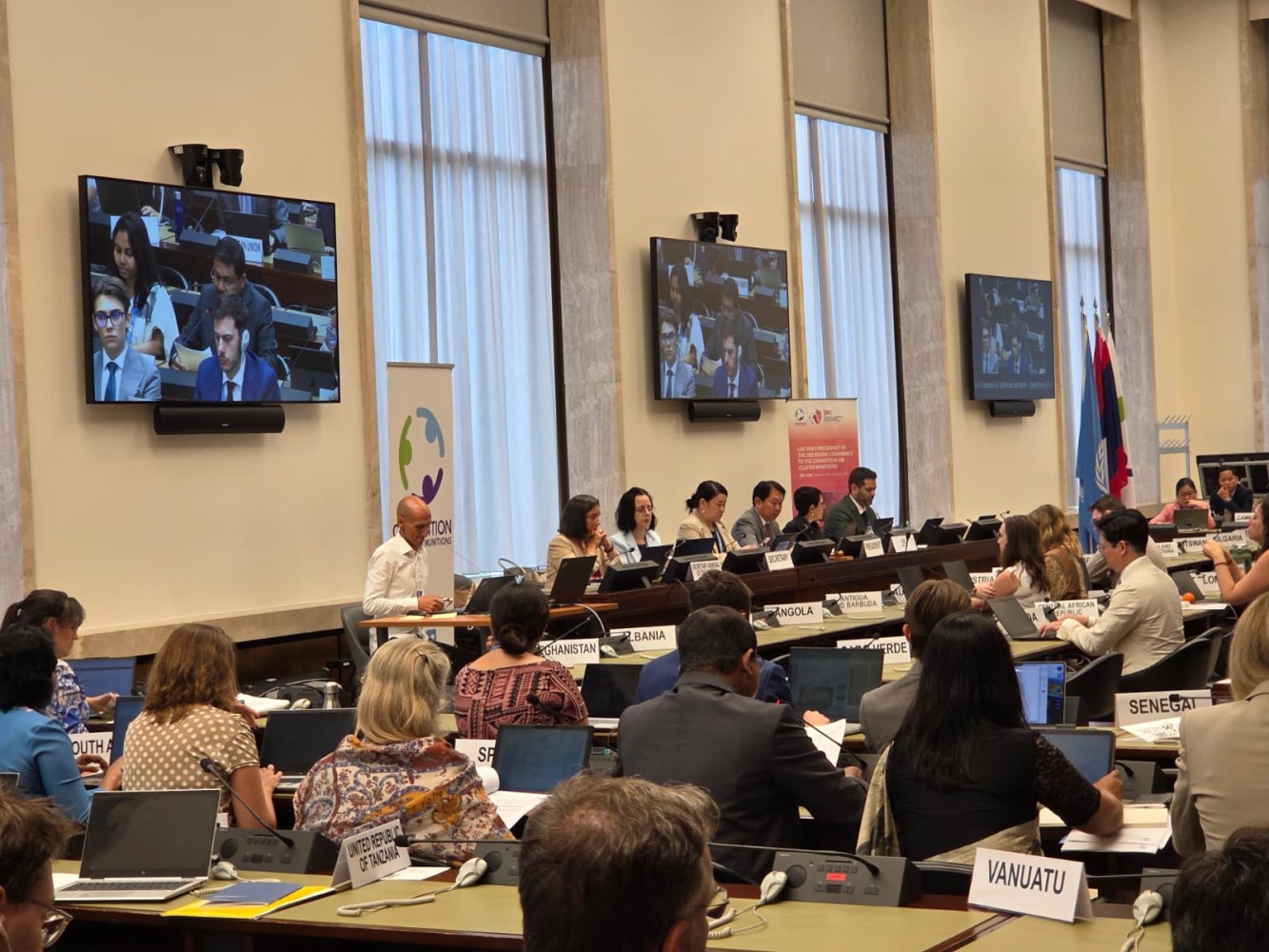


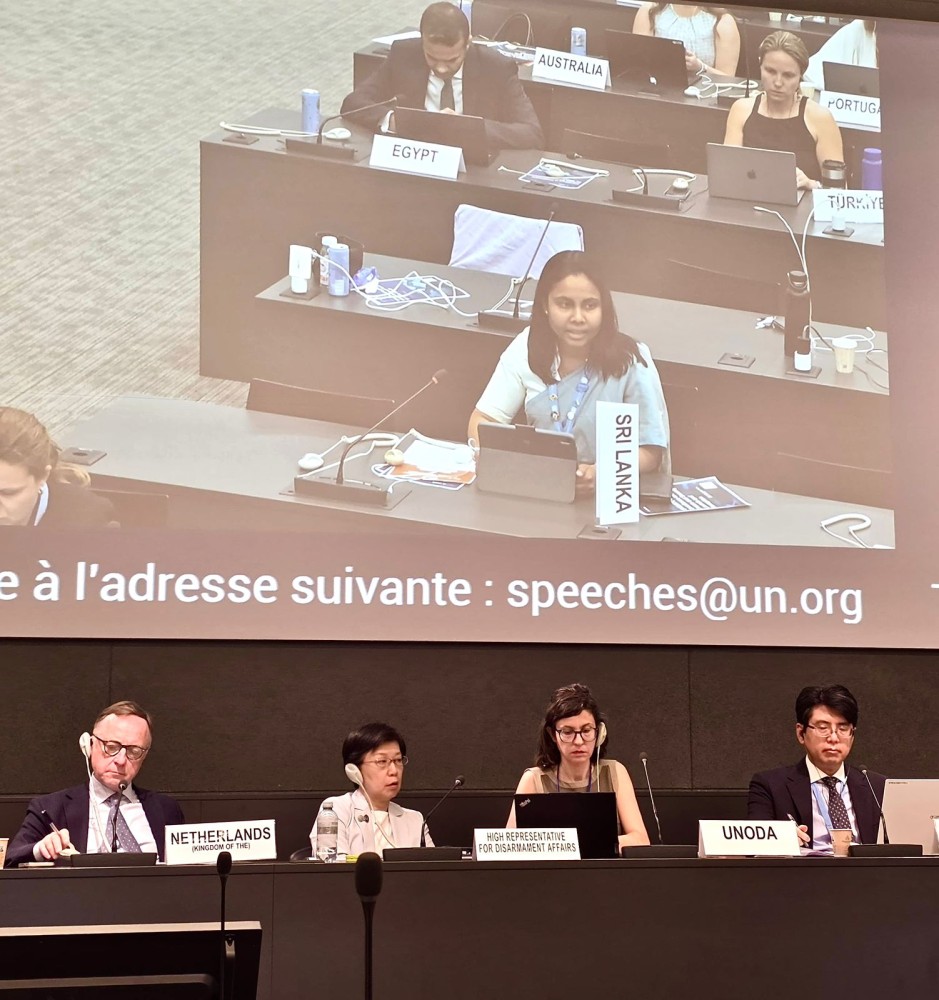
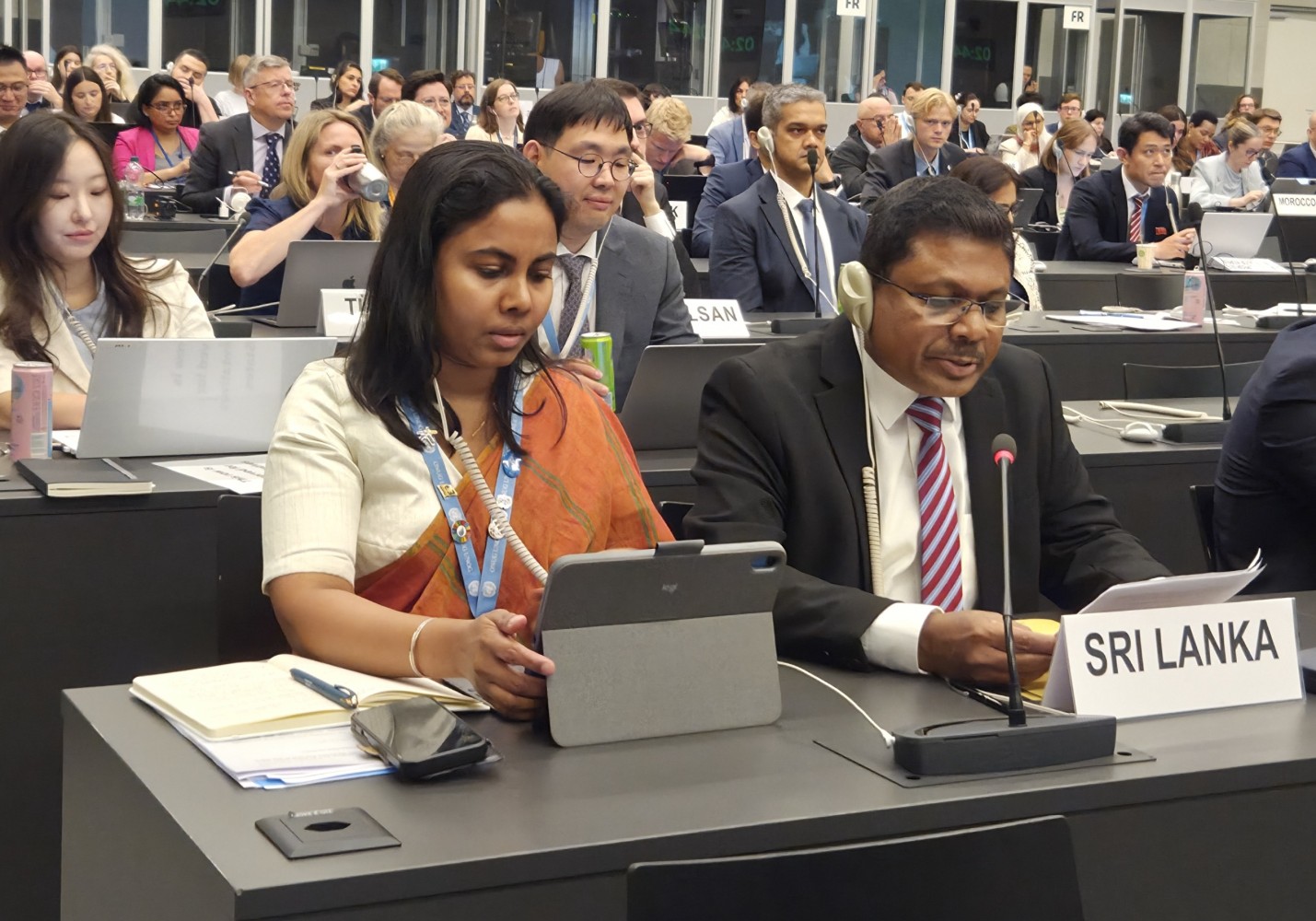
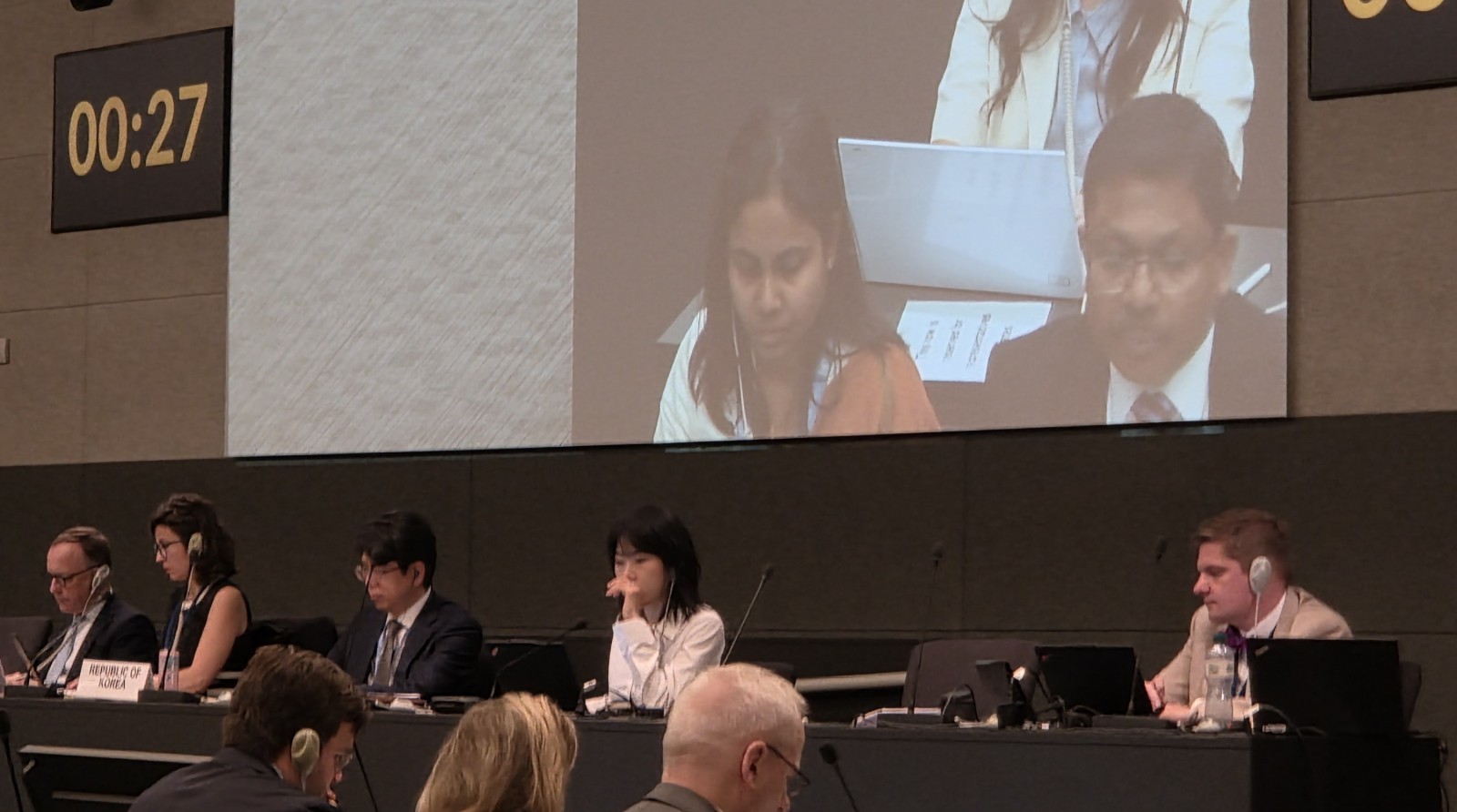
Addressing the Informal Exchanges on Artificial Intelligence (AI) in the Military Domain and its Implications for International Peace and Security, on 15 June 2026, at the United Nations in Geneva, Ambassador and Permanent Representative Sumith Dassanayake highlighted Sri Lanka’s strong position to negotiate a legally binding instrument to address the challenges and concerns posed by emerging technologies in the area of Lethal Autonomous Weapons Systems (LAWS).
In his intervention, Ambassador Sumith Dassanayake emphasised that on-going discussions in the UN system should evolve beyond autonomous weapons systems and need to increasingly focus on new and emerging AI capabilities such as AI Decision Support Systems (AI-DSS), AI cyber capabilities, integrating AI into nuclear weapons etc.
Ambassador Sumith Dassanayake further underscored that the application of AI in the military domain raises serious concerns regarding human responsibility, accountability, the increased risk of miscalculation and escalation of potential violations of International Humanitarian Law (IHL). Sri Lanka strongly advocates for human centrality throughout the life cycle of AI in Military Domain and strongly opposes the dehumanization of decision-making and the transfer of life-and-death decisions to machines and algorithms.
The informal exchanges were convened in Geneva pursuant to the mandate of the United Nations General Assembly Resolution 80/58 presented by the Kingdom of the Netherlands and the Republic of Korea. Sri Lanka also voted in favour of the resolution.
Permanent Mission of Sri Lanka to the United Nations in Geneva
16 June 2026
Excellencies,
Sri Lanka welcomes the convening of these informal exchanges in Geneva under General Assembly resolution 80/58, and appreciates the Kingdom of the Netherlands and the Republic of Korea for this initiative. We also thank the Office for Disarmament Affairs for organizing this timely and important process in an inclusive manner. We also welcome the Secretary-General’s report A/80/78, which provides a useful baseline for our discussions by reflecting the diversity of views across States, International and regional organizations, civil society and other stakeholders.
Sri Lanka has been strongly advocating for a legally binding instrument to address the challenges and concerns raised by emerging technologies in the area of lethal autonomous weapons systems, in particular through the ongoing and valuable work of the Group of Governmental Experts on Emerging Technologies in the Area of Lethal Autonomous Weapons Systems (GGE on LAWS), established under the Convention on Certain Conventional Weapons (CCW). Simultaneously as a main sponsor of the UNGA Resolution on Lethal Autonomous Weapons Systems (LAWS) and a supporter of the resolution 80/58 which is mandated to convene these informal consultations, Sri Lanka strongly believes that it is essential to ensure complementarity between different discussions on AI in military domain in UN Disarmament machinery. Therefore, it is important to address rapidly growing concerns of AI in Military Domain through well-coordinated centralized UN mechanism at in a non-discriminatory and inclusive approach covering all aspects, including humanitarian, legal, security, technological and ethical perspectives. These discussions should avoid duplications.
As outlined in the UNGA Resolution 80/58, Sri Lanka also support that that ‘international law, including the Charter of the United Nations, international humanitarian law (IHL) and international human rights law, applies to matters governed by it that occur throughout the life cycle of artificial intelligence capabilities as well as the systems that they enable in the military domain’.
While understanding the complex legal challenges posed by AI applications in military domain, Sri Lanka is of the view that the existing international law, particularly the International Humanitarian Law (IHL) should be strictly adhered and any new laws, legal and normative frameworks should be negotiated particularly based on the existing IHL.
Further Sri Lanka supports resolution’s focus ‘on the whole life cycle of artificial intelligence capabilities applied in the military domain, including the stages of pre‑design, design, development, evaluation, testing, deployment, use, sale, procurement, operation and decommissioning’.
While AI is increasingly being integrated into military applications, our discussions regarding its impact are not keeping pace with these advancements. While the AI is mainly integrated into military domain through the autonomous weapons systems, the new and emerging areas including various AI capabilities such as AI Decision Support Systems (AI-DSS), AI Cyber capabilities, integrating AI into nuclear weapons etc need to be broadly discussed.
The application of AI in the military domain raises serious concerns regarding human responsibility, accountability, and the increased risk of miscalculation and escalation of violations. Sri Lanka strongly advocates for human centrality throughout the weapons cycle. We strongly oppose the dehumanization of decision-making and the transfer of life-and-death decisions to machines and algorithms.
Sri Lanka also attaches importance to an inclusive multilateral process that avoids fragmentation, draws on the expertise of international organizations, academia, civil society, and industry, and ensures that all States, including developing countries, can participate meaningfully. Capacity-building and knowledge-sharing in addressing the issues in AI in military domain are especially important if we are to bridge the AI divide and ensure that governance and solutions are both effective and equitable.
During the informal exchanges, Sri Lanka is ready to engage constructively in identifying shared understandings and common landing zones and practical future steps in effectively addressing the issues of AI in military domain.
Thank you.
- Side Event on 'Ensuring Safe and Credible Land Release: Sri Lanka’s Completion Survey Process and Lessons Learnt', 24 April 2026
- Statements by Sri Lanka at the First Session of the 2026 CCW Group of Governmental Experts on Emerging Technologies in the Area of Lethal Autonomous Weapons Systems (GGE on LAWS), 02-06 March 2026, Geneva
- Minister Vijitha Herath Addresses the High-Level Segment of the Conference on Disarmament