





Co-Chairs, Excellencies, Distinguished Colleagues,
As AI increasingly becomes the interface between people and knowledge, public services and economic opportunity, inclusion will no longer be determined simply by whether people have access to AI.
Inclusion will depend on whether AI understands the people it is intended to serve.
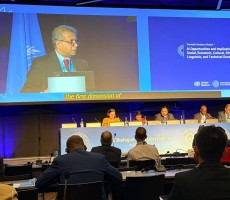
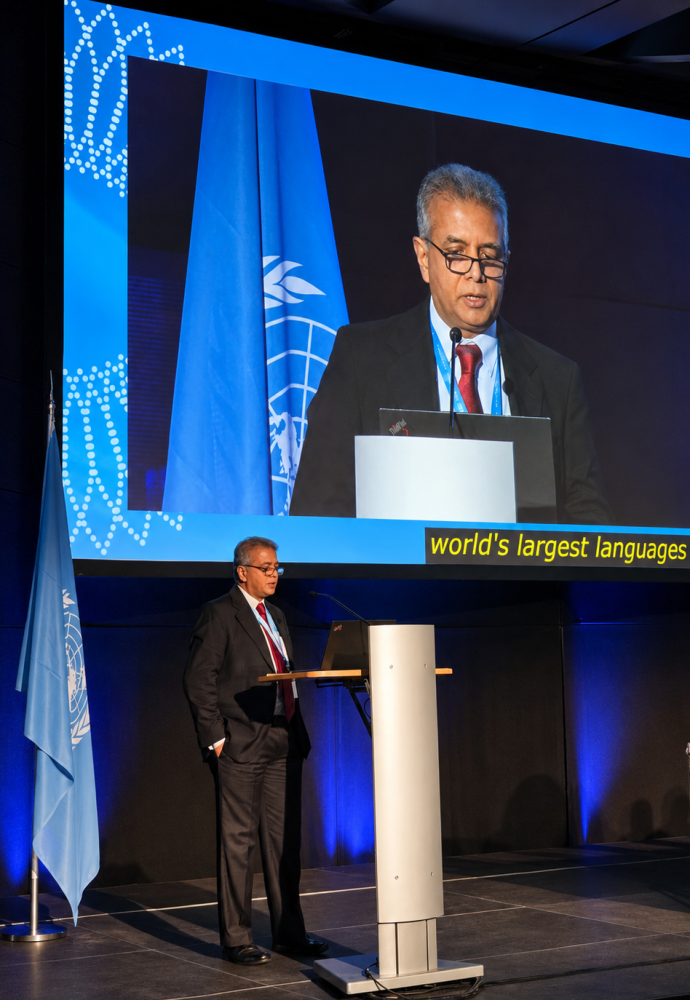
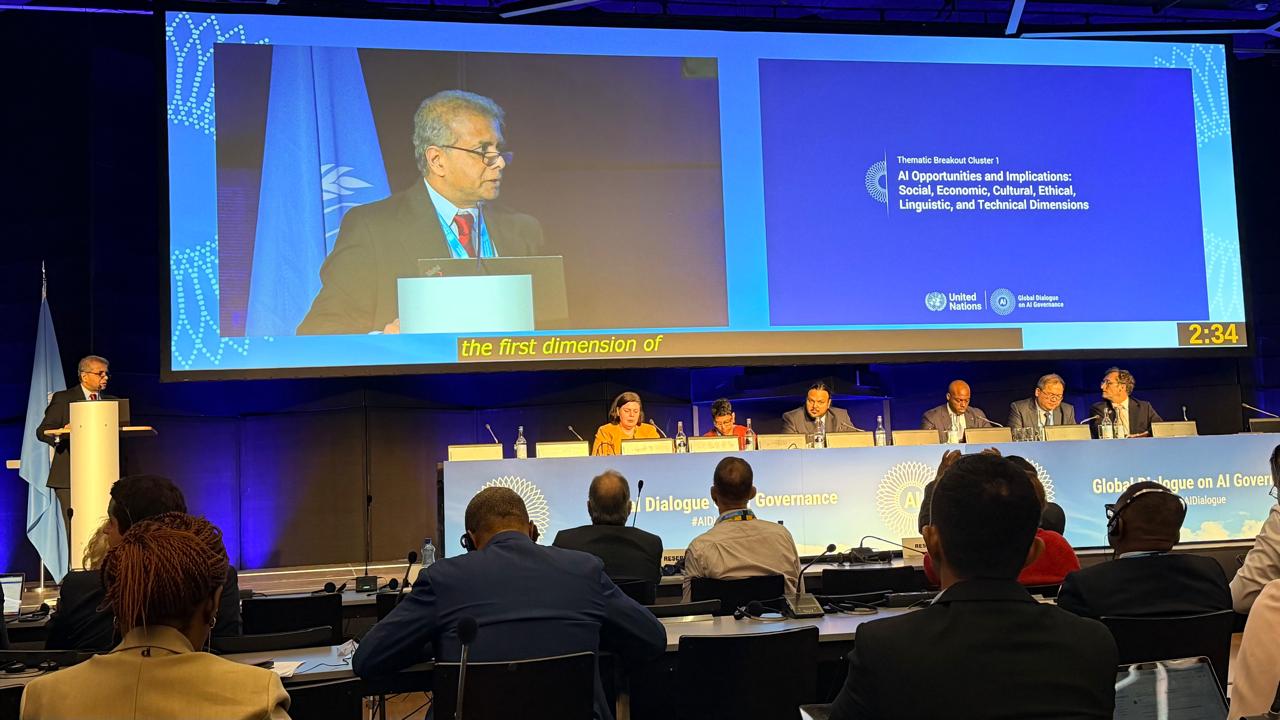
The first dimension of this challenge is language. Today, several hundred languages and dialects remain under-served, in terms of limited datasets, language technologies and AI models.
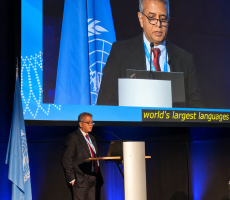
If left solely to market forces, AI will naturally evolve around the world's largest languages, leaving many communities on the margins of the AI economy.
Closing this gap requires investment in language equalizing technology, linguistic datasets and foundation models
But language parity alone will not suffice. True symmetry also requires culturally inclusive AI.
An AI system that understands my language and dialect perfectly, but does not understand my cultural context, is only partially inclusive.
If AI cannot recognize local value systems, traditions and institutions, farming practices, legal systems or cultural norms, it cannot provide advice that is trusted or relevant.
AI must understand not only how we speak, but also how we live within our societal construct.
Deep and meaningful inclusion then raises the imperative of Sovereign AI – the ability for countries to deploy AI in ways that reflect their own National Priorities, Cultures and languages, without having to compromise independence, sensitive data or national resilience.
To reach these ideals, Sri Lanka's digital transformation architecture places AI powered language equalizers as Digital Public Infrastructures.
Language models, speech recognition, optical character recognition and translation services will become Horizontally platformed shared capabilities, that can be reused across government, industry and society.
Simultaneously, AI will also enrich adjacent DPIs – such as conversational government information services and multi-lingual farmer advisory services.
Investments in these capabilities are investments in equal opportunity, but smaller and less affluent nations will not achieve these ideals, unless international cooperation bridges both the Sovereign AI Gap as well as Gaps in Localization.
Deep inclusion requires decisive action from the international community on the multiple fronts of Sovereign AI Infrastructure, Low Resource Language Support, Open-Source Models and research partnerships.
Smaller and Developing nations must not be constrained to being just consumers of AI, but be empowered as contributors to the knowledge, language, and cultural perspectives upon which future AI systems are built.
Ultimately, the success of AI will not be measured only by the intelligence of our models. It will be measured by the diversity of the people they empower.
Thank you.