


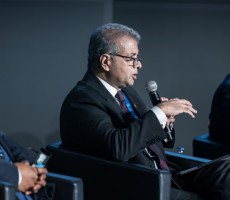
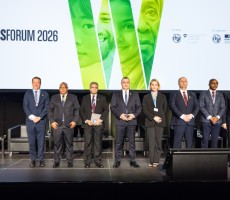
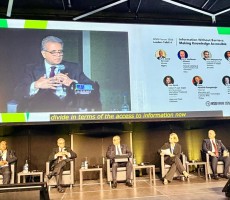
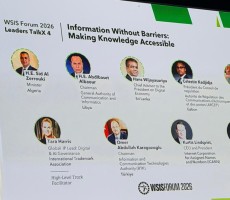






Every great technological revolution has lowered the barriers to knowledge, but not always equally.
The Internet democratised access to information, but language, literacy, and connectivity still determined who could benefit fully.
Now, AI has the potential to democratise knowledge and understanding, by simplifying access through natural communication, and adapting to language, context, and individual needs.
The promise of this AI dividend is revolutionary, but if AI evolves purely according to market forces,
It will naturally prioritise the most commercially attractive markets and their corresponding language variants, train on the richest datasets, and infer from the context of more homogeneous and advantaged societies.
Many of the world's low-resource languages, together with their ethnic and cultural context risk being excluded.
Inclusive AI therefore cannot simply mean multilingual AI. It must also mean culturally inclusive AI:
AI that embeds local context and knowledge, draws upon millennia of history and civilisation, and embodies the diversity of societies.
Sri Lanka's AI-first, Digital Transformation on the backdrop of a multilingual, multi-ethnic society with a 2500-year recorded history, illustrates both the opportunity and the challenge.
Sri Lanka’s whole-of-economy Digital Transformation blueprint places language equalisation capabilities as Horizontal Digital Public Infrastructures.
We also aspire to deploy AI DPIs which capture ethnic and cultural nuance.
The first manifestation of the model will prioritise citizen services delivered through an AI-powered Government Information Centre engaging citizens through natural conversation.
A farmer will engage with an Agri-AI, a child will access a tutor, all through natural and context enriched conversation. Persons with disabilities will use models which adapt to their individual needs.
An AI DPI based approach will reduce barriers that have existed for generations.
Inequal access to Sovereign AI challenges this inclusive ideal.
Collective action must ensure that Smaller and lower income nations have access to a minimum level of Sovereign AI, so that they can localise AI,
without being forced to compromise Privacy, Policy Autonomy or national resilience.
Our goal must go beyond simply making information available. It should be to ensure that every person can understand and benefit from information, regardless of language, abilities, or the opportunities into which they were born.
If we action these choices today, AI can become, not just another source of inequality,
but the most powerful instrument for Human Development and equalisation of opportunity, the world has ever known.
Thank you.