
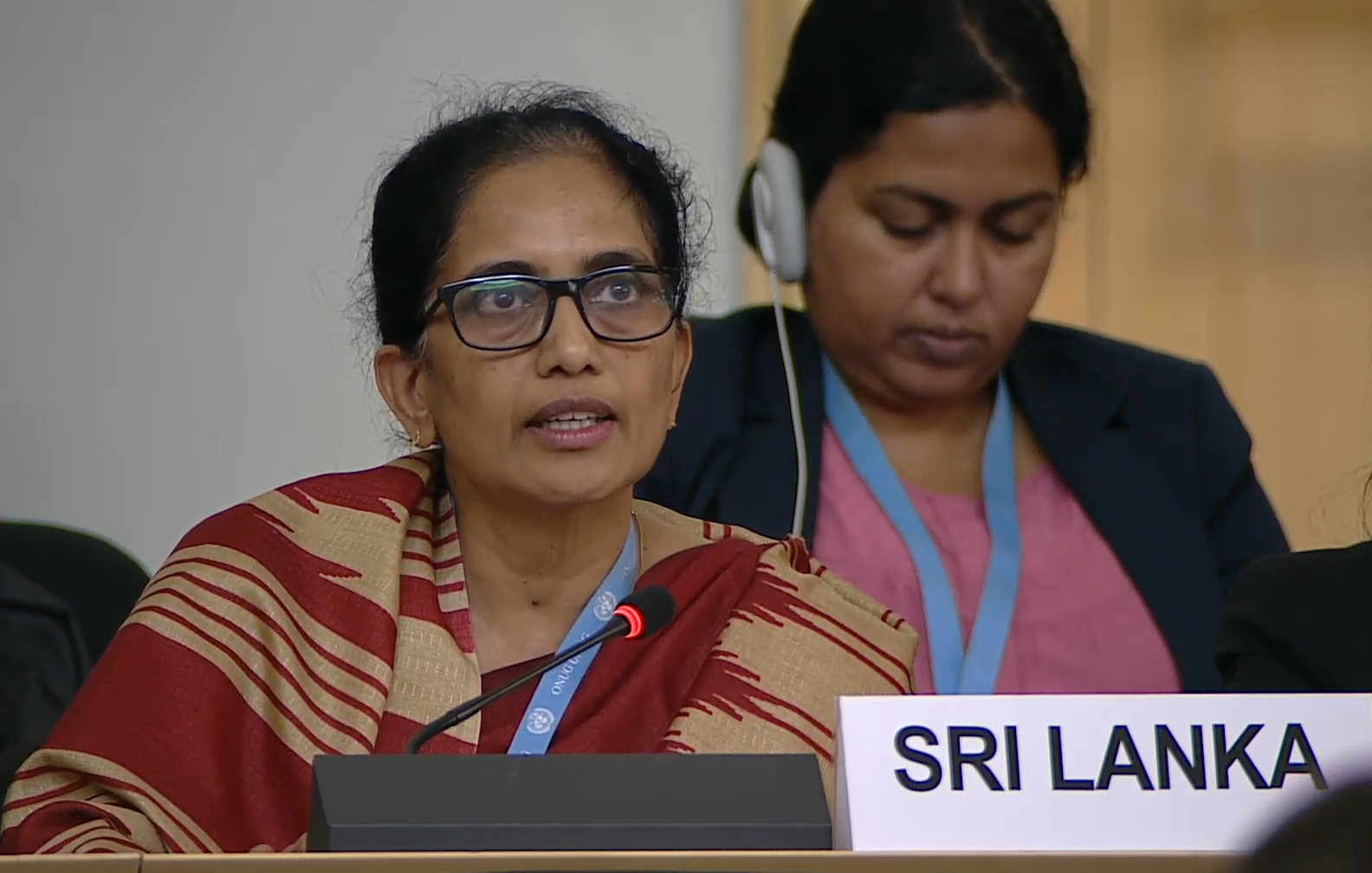
Mr. President,
Sri Lanka welcomes the convening of the Urgent Debate by the Human Rights Council at its 60th Session to discuss the unprovoked attacks against Qatar on 9th September, at the request of OIC and GCC countries.
Mr. President,
Sri Lanka condemns the recent attacks on Qatar, which risk further escalating volatility and undermining regional security. Sri Lanka strongly emphasizes the need to exercise restraint and the importance of employing dialogue and diplomacy rather than military aggression over sovereign countries, while upholding the universally accepted international norms and laws.
The Human Rights Council has a special duty to address the devastating impact of continuing violence and hostility on the people in the Middle East region, especially the dire humanitarian situation in the Occupied Palestinian Territories.
In this context, Sri Lanka calls on the Council to avoid double standards in its approach and the treatment of situations of human rights violations and ensure that the rights of all are promoted and protected equally regardless of geography and other considerations.
Thank you
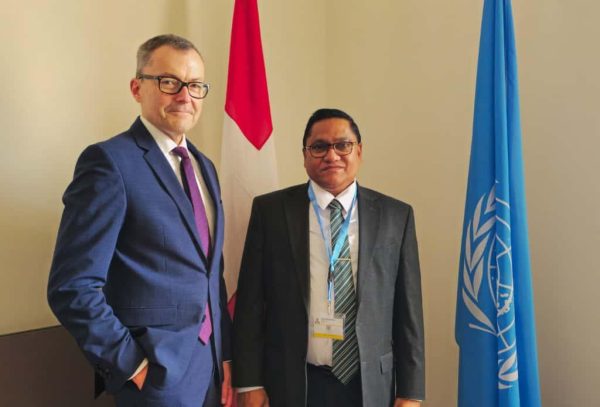
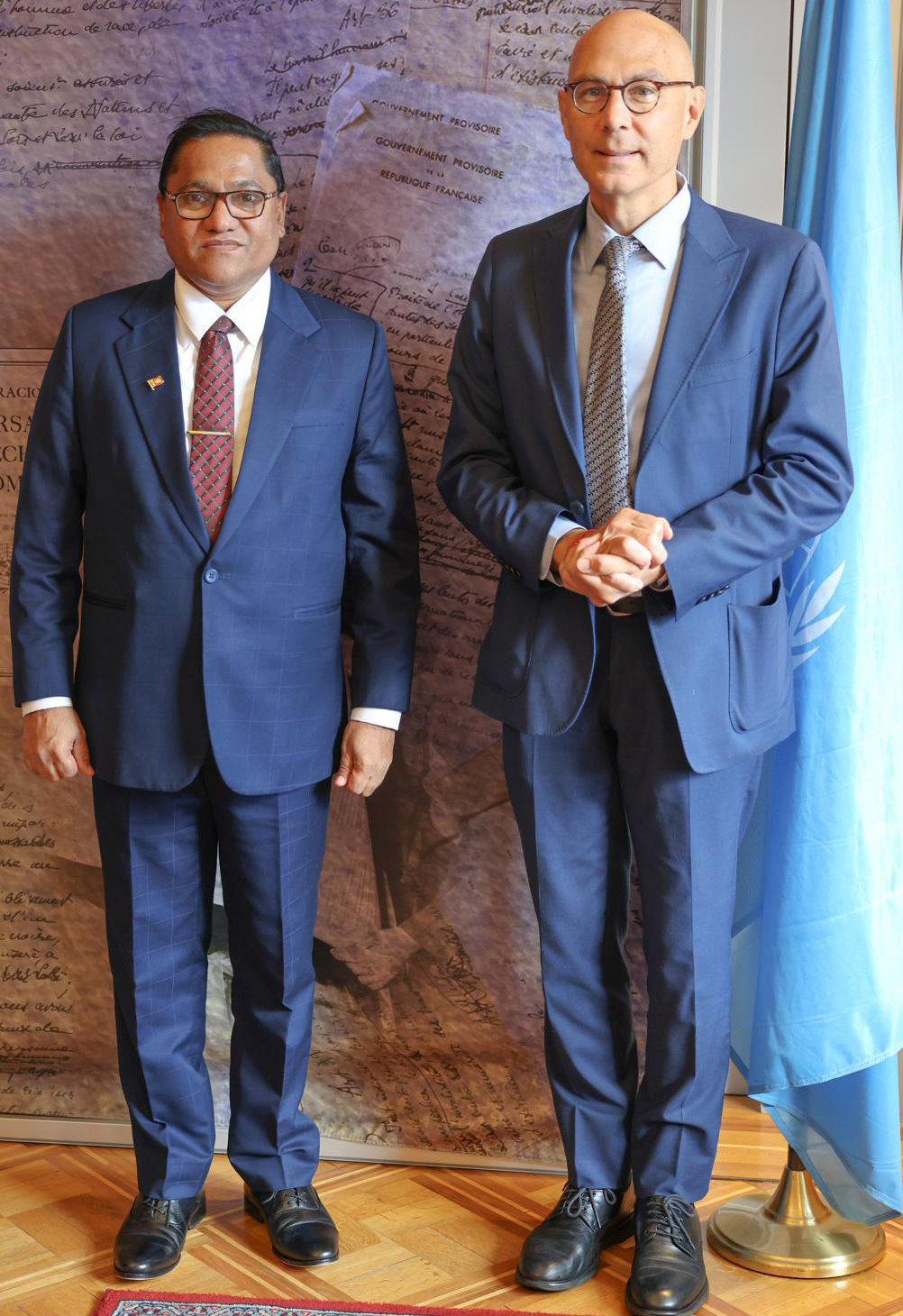
Minister of Foreign Affairs, Foreign Employment and Tourism, Vijitha Herath concluded his visit to Geneva where he addressed the 60th Session of the United Nations Human Rights Council (UNHRC) on September 8, 2025, delivering the Government statement during the Interactive Dialogue on Sri Lanka.
Minister Herath reiterated Sri Lanka’s commitment to achieving reconciliation through domestic processes and outlining the measures already taken by the Government for transformation to advance the rights and well-being of all Sri Lankans.
The Foreign Minister further reaffirmed Sri Lanka’s opposition to externally imposed mechanisms.
Addressing the 60th Session of the United Nations Human Rights Council (UNHRC) in Geneva, during the Interactive Dialogue (ID) on Sri Lanka on 08 September 2025, Minister of Foreign Affairs, Foreign Employment and Tourism, Vijitha Herath underlined the commitment and the political will of the Government for transformation in the country and to create a new political culture to advance the rights and well-being of all Sri Lankans. The Minister highlighted the progress made within a short period through the domestic processes towards building national unity and reconciliation while urging the Council to allow Sri Lanka time and space to achieve this objective.


Mr. President,
High Commissioner,
Excellencies, ladies and gentlemen,
I speak to you on behalf of the Government of Sri Lanka at a time when my country has embarked on a historic journey towards transformational change. This journey is about democratic governance, human rights, inclusive economic growth and national unity.

The UN High Commissioner for Human Rights Volker Türk concluded a four-day official visit to Sri Lanka from 23 to 26 June 2025.
During the visit, High Commissioner Türk called on President Anura Kumara Disanayaka and Prime Minister Dr. Harini Amarasuriya and had constructive discussions with Minister of Foreign Affairs, Foreign Employment and Tourism Vijitha Herath, Minister of Justice and National Integration Harshana Nanayakkara, Minister of Public Security and Parliamentary Affairs Ananda Wijepala, Deputy Minister of Foreign Affairs and Foreign Employment Arun Hemachandra and Deputy Minister of Defence Major General Aruna Jayasekara. He also met the Speaker of the Parliament, the Chief Justice and several government representatives.
Discussions focused on measures to advance human rights including economic and social rights, strengthening national reconciliation processes and ensuring social justice. The Government reiterated to the High Commissioner its sincere commitment to achieving these objectives and briefed on the action already taken and those envisaged, including confidence building measures, the Clean Sri Lanka program, anti-corruption initiatives, further strengthening reconciliation mechanisms, repealing the Prevention of Terrorism Act, revising the Online Safety Act and new laws to advance the rights of persons with disabilities.
During deliberations, the High Commissioner highlighted the momentum of change he witnessed across all segments of the Sri Lankan society. He appreciated the Government’s plans on promoting ethical governance, human rights and national unity, and offered the support of his Office to strengthen the Government’s initiatives. High Commissioner Türk said that he was encouraged by the Government’s measures to address corruption and mismanagement and hoped that the momentum would continue. Noting that the discussions had showed genuine openness to address issues, the High Commissioner stated that Sri Lanka can become an example of peaceful co-existence while embracing its diversity as a strength. The High Commissioner stated that he is visiting Sri Lanka with a deep sense of hope at a time when the world and the multilateral system are facing unprecedented challenges.
The High Commissioner also met with several non-government stakeholders including religious leaders, political parties and civil society in Colombo, Jaffna, Trincomalee and Kandy.
In Colombo, he engaged with representatives of the national institutions dealing with reconciliation - the Office on Missing Persons, the Office for Reparations and the Office for National Unity and Reconciliation. The representatives briefed High Commissioner Türk on the work of their respective institutions and the progress made in the respective work plans. He also had discussions with the Human Rights Commission of Sri Lanka and acknowledged the longstanding work of the Commission.
In Kandy, High Commissioner Türk visited the Temple of the Sacred Tooth Relic where he met
the Chief Custodian and attended the Thewawa ceremony. He also had an audience with the Most Venerable Tibbatuwawe Sri Siddhartha Sumangala Mahanayake Thero of the Malwatta Chapter and the Most Venerable Warakagoda Sri Gnanarathana Mahanayake Thero of the Asgiriya Chapter.
In Jaffna, he visited the sacred Nallur Kovil and participated in religious activities.
During his travel to various parts of the country, the High Commissioner met with the Governors of the Northern and Eastern Provinces, District Secretaries, and civil society representatives as well as the public. He also visited the Chemmani grave site in Jaffna.
The High Commissioner conveyed his deep gratitude to the Government of Sri Lanka for the cooperation extended throughout the visit and appreciated Sri Lanka’s continuing constructive engagement with his Office.
The visit of High Commissioner Türk to Sri Lanka marks the first by a UN High Commissioner for Human Rights since February 2016.
Ministry of Foreign Affairs, Foreign Employment and Tourism
Colombo
27 June 2025


The United Nations High Commissioner for Human Rights Volker Türk will undertake an official visit to Sri Lanka from 23 to 26 June 2025. This marks the first visit by a UN High Commissioner for Human Rights to Sri Lanka since February 2016.
During the visit, the High Commissioner is scheduled to call on the President and the Prime Minister. He will also hold meetings with the Minister of Foreign Affairs, Foreign Employment, and Tourism, several other Cabinet Ministers, Members of Parliament, senior Government officials, religious leaders, representatives of civil society, members of the diplomatic community, and the Human Rights Commission of Sri Lanka.
As part of the programme, the High Commissioner will travel to Kandy where he will pay respects to The Temple of the Sacred Tooth Relic and call on the Chief Prelates of the Malwatte and Asgiriya Chapters. He will also travel to Jaffna and Trincomalee where he will meet with the Governors of the Northern and Eastern Provinces.
Substantive discussions during the visit will focus on further advancing the promotion and protection of human rights and reconciliation, in line with the Government of Sri Lanka’s ongoing constructive engagement with the Office of the High Commissioner for Human Rights.
Ministry of Foreign Affairs, Foreign Employment, and Tourism
Colombo
20 June 2025
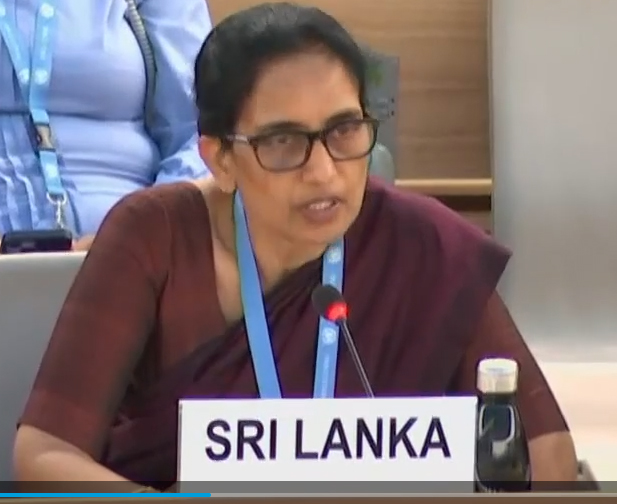
Mr. President,
This session of the Council is taking place amidst multiple global challenges, threats to multilateralism and international institutions, while hunger, conflict and climatic disasters are threatening the very survival of millions across the world. The need for international cooperation and dialogue have never been more essential, than at the present juncture. It is timely to reflect the founding principles of this Council and adopt an approach that addresses the pressing human rights challenges of today.
Sri Lanka remains an active partner in the multilateral framework, despite domestic challenges facing its people. The Government of President Anura Kumara Disanayaka has undertaken substantive efforts towards introducing a new political culture, addressing corruption and prioritizing economic revival, while reaffirming commitment towards meaningful reconciliation through domestic institutions.
A number of initiatives have been undertaken to strengthen the national anti-corruption framework, supported by a stronger, more independent Commission to Investigate Allegations of Bribery or Corruption, reflecting the Government’s firm intention to build a corruption-free society where fairness, integrity, and accountability shape every aspect of governance.
To enhance the independence and transparency of the criminal justice system and improve public trust, the Govt is seeking to expedite legal proceedings through the creation of an independent public prosecutor´s office. The Prevention of Terrorism Act is to be repealed following a review of the existing legislation.
The domestic independent mechanisms and processes working on missing persons, reparations and reconciliation, are continuing their work within the Constitutional framework. Increased engagement of the public with the work of these institutions showcase the growing public trust in their activities.
At a time when the UN human rights framework is facing challenges, Sri Lanka believes that the Council must prioritize thematic issues like food security, health, development and climate change that need to be addressed urgently for the benefit of humankind. Ensuring that the Council's actions lead to tangible improvements through a fair approach in human rights situations is essential.
Human Rights situations must be assessed with impartiality, non-selectivity and objectivity.
Mr. President,
Sri Lanka remains committed to engaging in a constructive spirit of dialogue and cooperation with the members of the United Nations including this Council within our national legal framework. In this context, we look forward to receiving the High Commissioner for Human Rights in Sri Lanka later this month. Thank you
- Statement by Her Excellency Himalee Arunatilaka, Ambassador and Permanent Representative of Sri Lanka to the United Nations in Geneva at the 58th Session of the United Nations Human Rights Council
- Statement delivered by Hon. Vijitha Herath, Minister of Foreign Affairs, Foreign Employment and Tourism on 25 February 2025 during the High Level Segment of the 58th session of the Human Rights Council
- Sri Lanka presents progress made in advancing rights of women and girls to the CEDAW Committee