
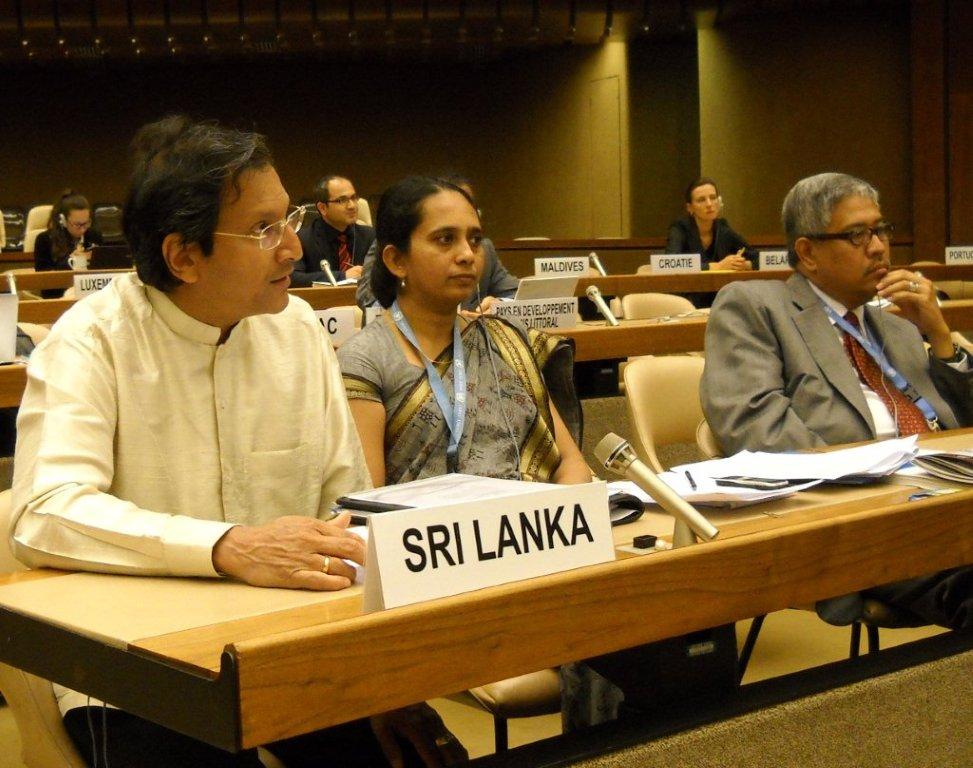
The Sri Lanka delegation to the 21st Session of the Human Rights Council in Geneva is continuing to engage with the relevant Interactive Dialogues with Special Procedures Mandate Holders and Working Groups.
Participating in the Session on 'Human Rights Situation in Palestine and other occupied Arab territories', Sri Lanka expressed its deep concern about the hardships faced by the Palestinian people. Noting that it had long advocated the recognition of the inalienable rights of the Palestinian people, Sri Lanka said it remains steadfast in its unequivocal support to the people and the Government of Palestine for their just struggle to achieve the right of statehood, coexisting peacefully alongside Israel. Sri Lanka urged the Government of Israel to lift the blockade placed on Gaza, within the framework of Security Council Resolution 1860, which has a devastating impact on the lives of the ordinary people of Palestine, especially the young. Sri Lanka also voiced its belief that the State of Palestine would soon be able to assume its rightful place among the community of states at the United Nations.
On behalf of the G-15 member States, Ambassador Ravinatha Aryasinha emphasized that developing countries and the LDc’s need UNCTAD’s assistance now more than ever in designing policies for dealing with persistent and emerging challenges for development in the aftermath of the recent economic and financial crisis which has slowed the global economic growth.
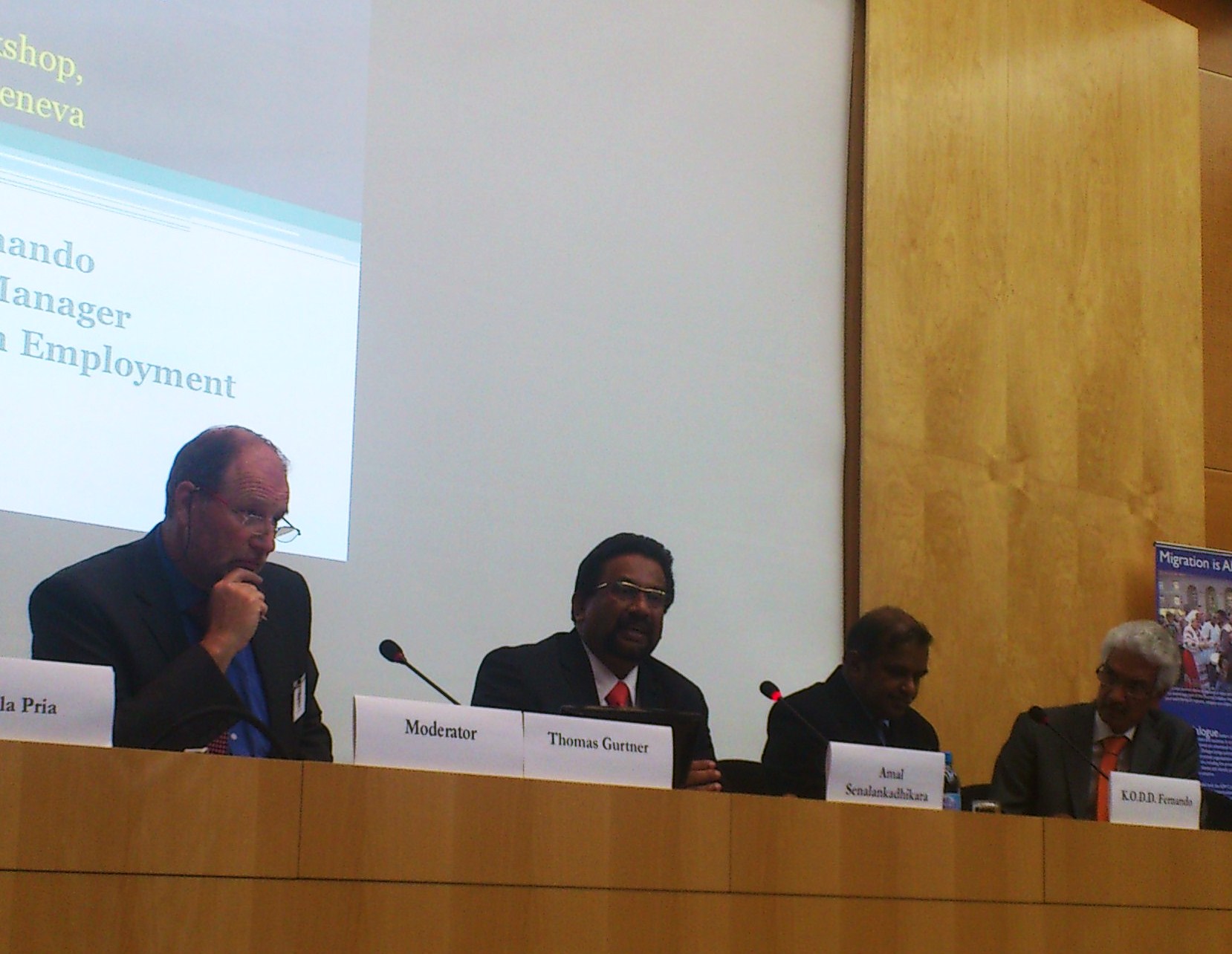
Mr Amal Senalankadhikara, Chairman of the Bureau of Foreign Employment and Mr Devseth Fernando, Additional General Manager of the Bureau of Foreign Employment took to the main podium at the opening session of the intercessional workshop, titled ‘Protecting migrants during times of crisis : immediate responses and sustainable strategies’, organized by the international Organization for Migration. The event was organized in line with the international dialogue on migration (IDM) for 2012, which aims to focus on managing migration in crisis situations.
The Sri Lanka Delegation to the 21st Session of the Human Rights Council, intervening in the interactive dialogue with the Special Rapporteur on 'Extreme Poverty', has emphasized that States and economic actors must take concerted efforts to address extreme poverty and create an enabling environment for sustainable economic development, which is accessible to all. Noting that Sri Lanka considers the Draft Guiding Principles on Extreme Poverty and Human Rights as a tool, which can lead to developing and shaping measures and activities needed to eradicate extreme poverty across the world, the delegation called for strong political will and a multi-pronged and multi-dimensional approach at all levels to make the eradication of extreme poverty a reality.
Sri Lanka at ID on 'Truth, Justice, Reparation and Non-recurrence' and 'Children and Armed Conflict'
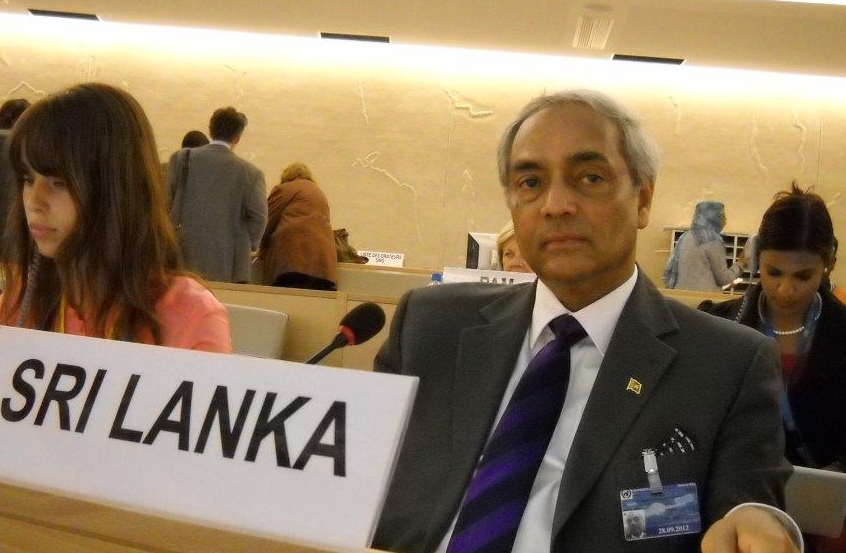
The Sri Lanka Delegation to the 21st Session of the Human Rights Council which opened in Geneva earlier this week is continuing to engage with the relevant Interactive Dialogues with Special Procedures Mandate Holders and Working Groups.
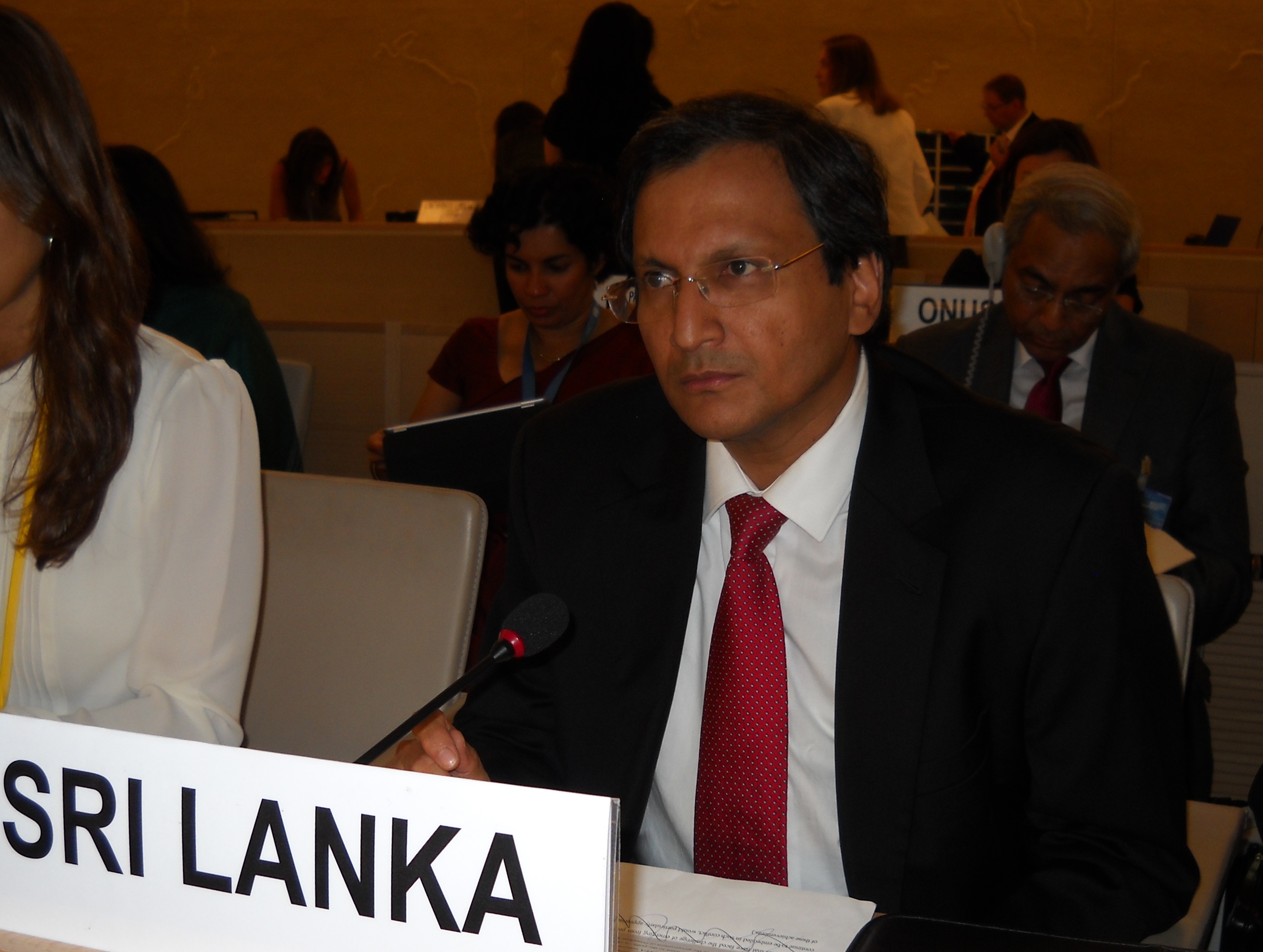
Ambassador Ravinatha Aryasinha has said, the international community, especially those countries that have faced the challenge of emerging from protracted conflict or continue to be embroiled in such conflict, would particularly appreciate the significance of Sri Lanka's achievements since the ending of terrorism a little over 3 years ago.
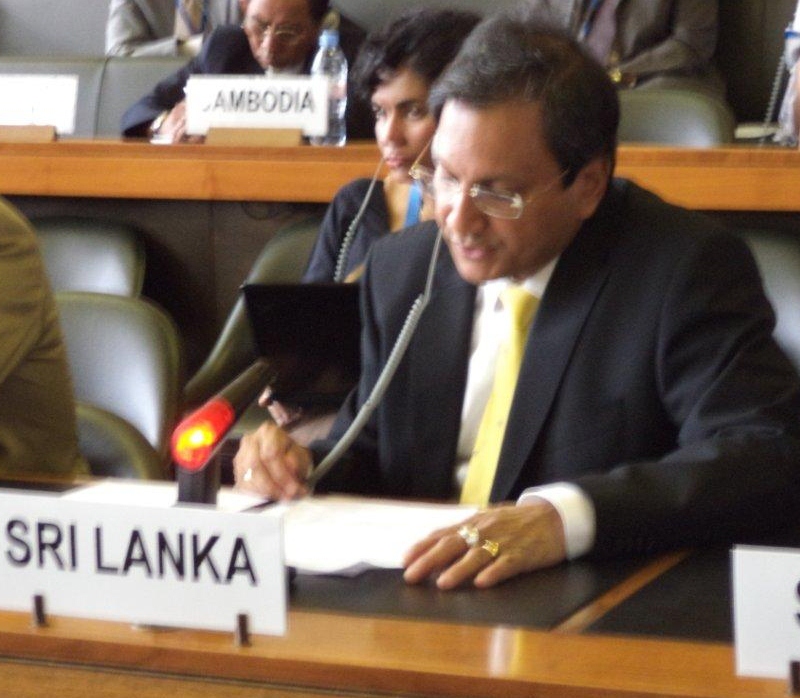
Ambassador Ravinatha Aryasinha, Sri Lanka's Permanent Representative to the UN in Geneva, addressing the Conference on Disarmament (CD) on Tuesday (31 July 2012), has expressed Sri Lanka's "profound disappointment that the Conference has not been enabledto undertake substantive work on its agenda". He said, "it is time to avoid the temptation of subjecting the work of this Conference to the vagaries of changing international strategic landscape, and instead, to harness its potential to contribute towards enhancing cooperative security". Emphasizing the importance of the CD "as the sole multilateral disarmament negotiating forum of the international community", Ambassador Aryasinha said, "in order to continue to preserve the unique role of the Body, it is vital that all of us, the Member States, allow the Conference to begin its substantive work on the basis of a balanced and focussed Programme of Work, that takes into account security concerns of all its Members in an equitable manner, thereby ensuring its acceptance by consensus".