
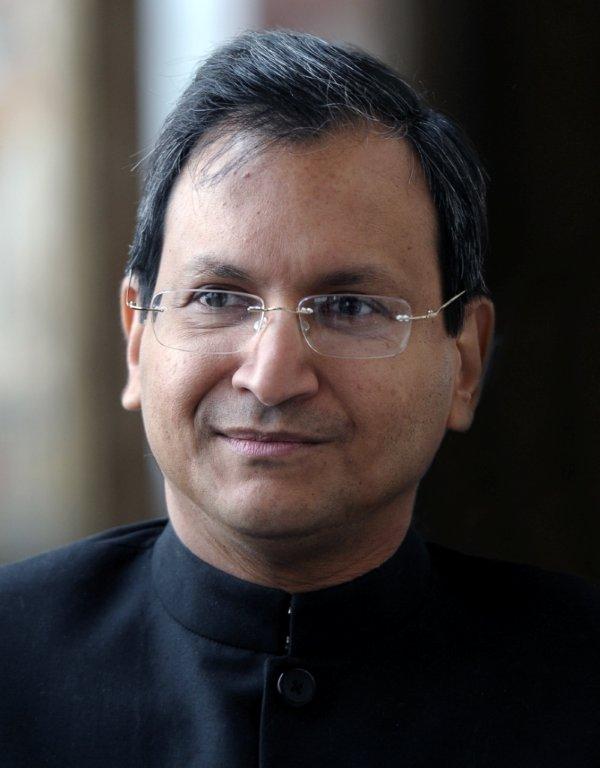
Sri Lanka's Permanent Representative to the UN in Geneva Ambassador Ravinatha Aryasinha has said,strong political will is needed to finalize the process of considering, revising, and ultimately endorsing the draft Right to Development criteria and operational sub-criteria, towards the elaboration of a coherent set of standards on this intrinsic right. Addressing the 14th session of the U.N Open-ended Intergovernmental working group on the Right to Development at the UN in Geneva on 13 May 2013, he said with the world struggling through multiple crises, a renewed international commitment toward sustainable development at RIO+20, and the post-2015 development agenda upon us, the effective implementation of the right to development is required now, more than ever before.
Full text of the Statement

Sri Lanka's Permanent Representative to the UN in Geneva Ambassador Ravinatha Aryasinha, has called for "a balanced approach" in addressing the objectives of the Treaty on the Non-Proliferation of Nuclear Weapons (NPT). Noting that "Sri Lanka remains fully committed to the nuclear non-proliferation commitments of the NPT and have steadfastly and consistently supported the global initiatives on non-proliferation", Ambassador Aryasinha noted that "nuclear non-proliferation however remains one of three pillars of the NPT, which requires equal attention along with the other two - promotion of safe and secure use of nuclear energy for peaceful purposes, and nuclear disarmament". He said "such an approach which includes the implementation of the 13 practical steps agreed on to meet the disarmament commitments during the 2000 Review Conference to advance progressively towards the total elimination of nuclear weapons, is a necessary step on the road map to achieving the ultimate goal of a world free of nuclear weapons."
Sri Lanka's Permanent Representative to the UN in Geneva Ambassador Ravinatha Aryasinha addressing a Briefing on Migration and Healthheld at the International Organization on Migration (IOM) on 19th April 2013 has said the Government has readily recognized that migrants and their families left behind in Sri Lanka are vulnerable to migration related health challenges. Joint initiatives between the Sri Lanka Bureau of Foreign Employment (SLBFE), the Ministry of Health and IOM, have been established to ensure that the health-abuse of migrants is effectively addressed. Following a series of public consultations the draft 'Migration Health Policy for Sri Lanka' is to be formalized through its submission to the Cabinet of Ministers for final approval.
Read Full text of the statement
Says vote a rare moment of solidarity in re-constituted HRC for those who continue to believe in principle
Sri Lanka's Permanent Representative to the UN in Geneva Ambassador Ravinatha Aryasinha has said Thursdays vote on Sri Lanka in the United Nations Human Rights Council (HRC), had provided a rare moment of solidarity for countries that continued to believe in principle, to stand up and be counted, at a time the composition of the HRC is heavily weighted in favour of Western powers, and Bangladesh, China, Cuba, Djibouti, Jordan, Russia and Saudi Arabia who resisted action against Sri Lanka in 2012, were no longer members of the HRC. Ambassador Aryasinha said the Government of Sri Lanka was deeply grateful to the countries that stood by Sri Lanka this year - by voting against, abstaining and absenting themselves, and also helping in lobbying for support, thereby resisting this resolution, which was both deeply intrusive, as well as precedent setting.
The Resolution before the Council today is premised upon Resolution 19/2 of 2012 which was not recognized by Sri Lanka.
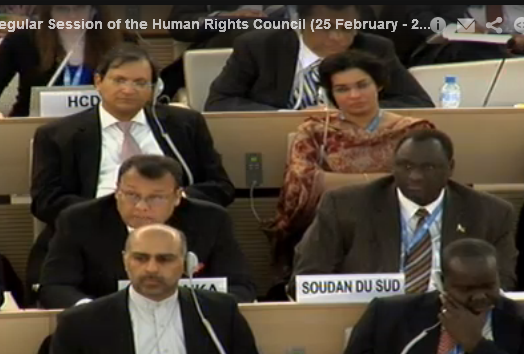
Despite our dissociation with that initiative, I must point out the salient features of that Resolution which called for Sri Lanka to implement the recommendations of its domestic mechanism, the Lessons Learnt and Reconciliation Commission (LLRC) and to formulate an action plan for implementation. Since its adoption, Sri Lanka has shown clear progress towards comprehensive reconciliation including by the preparation and implementation of the action plan called for by the Resolution.
Full text of the statement
With 13 countries opposing the resolution, 8 countries abstaining, and 1 country absenting itself, 22 out of a total of 47 members of the Human Rights Council, refused to support the U.S. sponsored resolution on Sri Lanka which was taken up for debate and vote at the 22nd Session of the UNHRC in Geneva on Thursday (21 March 2013). This cross regional group included Congo, Ecuador, Indonesia, Kuwait, Maldives, Mauritania, Pakistan, Philippines, Qatar, Thailand, UAE, Uganda, Venezuela (which opposed) and Angola, Botswana, Burkina Faso, Ethiopia, Japan, Kazakhstan, Kenya, and Malaysia (which abstained) and Gabon (which absented itself).
Developing countries expressed their confidence for the efforts made by Sri Lanka towards achieving national reconciliation and commended its level of cooperation with the UN.They clearly highlighted that the report A/HRC/22/38 was tabled today (20 March 2012) at the UN Human Rights Council under the agenda item 2 by the Office of the High Commissioner for Human Rights (OHCHR) was unwarranted and a clear overstepping of its mandate.They also underlined that the report of the OHCHR has no nexus to the principle objectives of the US sponsored resolution 19/2 of March 2012, and therefore, any further initiatives in the Council, based on or emanating from this report are counterproductive.
Full text of Media Release