
While noting the increasing role of the nuclear energy and nuclear technology for the socio-economic development of States, Sri Lanka expressed that there should be no obstacles placed on the path to peaceful uses, subject to accepted safeguard standards. Sri Lanka also noted the importance of civil nuclear cooperation, as an important tool for realising such peaceful uses by many countries.
Permanent Representative to the United Nations Office in Vienna, Ambassador A.L.A. Azeez made these observation on 7th May 2015 Main Committee III – Peaceful Uses of Nuclear Energy of the 2015 Review Conference of the Parties to the Treaty on the Non-Proliferation of Nuclear Weapons held in New York.
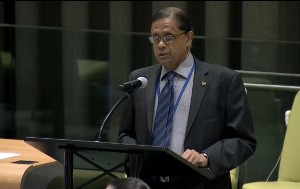
Sri Lanka reiterated its commitment to strive with all States and other Stakeholders, to make nuclear disarmament realizable and bring peaceful uses of nuclear technology within reach. While recognizing the inalienable right of peaceful use of nuclear technology as provided for in Article IV of the NPT, Sri Lanka also stressed the importance of shared responsibility of States to work toward eventual elimination of nuclear weapons. Sri Lanka also expressed caution on the over-emphasizing of the increasing role of nuclear security, particularly in an era where nuclear material and technology reaching the hands of non-state actors remains a distinct and dangerous possibility.
Dr. Rohan Perera, Permanent Representative to the United Nations in New York made these observations on 30 April 2015, at the 2015 Review Conference of the Parties to the Treaty on the Non-Proliferation of Nuclear Weapons (NPT). The Review Conference is being held from 27th April to 22 May 2015 at the United Nations Head Quarters in New York.
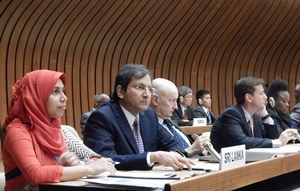
Sri Lanka has cautioned that "the possession of autonomous weapons by some States, combined with their possible asymmetric usages in war, may compel other States to also abandon their policies of restraint or moratorium and ignite an arms race". It has been noted that "the experience in nuclear weapons provides a useful lesson for all of us to understand the consequences of such an arm race, where even today possession itself has continued to remain a threat to regional as well as global security.
Sri Lanka's Ambassador to the UN in Geneva Ravinatha Aryasinha, made these observations during an intervention by Sri Lanka at the Meeting of Experts on Lethal Autonomous Weapon Systems (LAWS), held within the framework of the Convention on Certain Conventional Weapons (CCW) from 13-17 April 2015 at the Palais des Nations in Geneva. Second Secretary Mafusa Lafir participated in the deliberations. Earlier on Monday, Ambassador Aryasinha opened the week long meeting in his capacity as the Chair – Designate of the CCW for 2015.
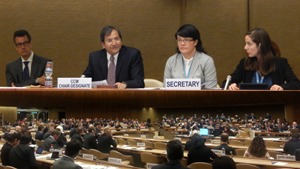
Sri Lanka's Ambassador to the UN in Geneva Ravinatha Aryasinha, in his capacity as the Chair – Designate of the Convention on Certain Conventional Weapons (CCW) for 2015, opened the week long 'Meeting of Experts on Lethal Autonomous Weapon Systems (LAWS)', held within the framework of the CCW on Monday (13th April) at the Palais des Nations in Geneva. The Convention, which 120 States are party to, seeks to ban or restrict the use of specific types of weapons that are considered to cause unnecessary or unjustifiable suffering to combatants or to affect civilians indiscriminately.
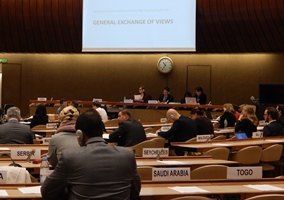
Sri Lanka has been designated by acclamation to Chair the 2015 Meeting of the High Contracting Parties to the Convention on Certain Conventional Weapons (CCW). Ambassador Ravinatha Aryasinha, Permanent Representative of Sri Lanka to the UN in Geneva, succeeds Ambassador Remigiusz A. Henczel, the Permanent Representative of Poland to the UN in Geneva.
Accepting the honor conferred on Sri Lanka by the 118 High Contracting Parties to the convention at the conclusion of the week long CCW sessions in Geneva on 14 November 2014, Ambassador Aryasinha expressed appreciation to the Non Aligned Movement (NAM) for proposing Sri Lanka on behalf of the Group. He said, "I am deeply humbled by the confidence placed in Sri Lanka, and the recognition of Sri Lanka's contribution to the field of disarmament over many decades - through the the Indian Ocean as a Zone of Peace initiative, the Conference on Disarmament (CD), the Treaty on the Non-Proliferation of Nuclear Weapons (NPT), the International Atomic Energy Authority (IAEA), the Organization for Prohibition of Chemical Weapons (OPCW), and particularly since the ending of the terrorist conflict by its comprehensive demining programme, a key focus area of the CCW".
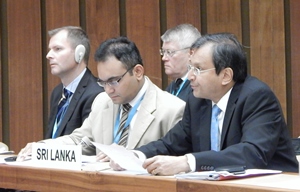
Sri Lanka's Ambassador to the UN in Geneva Ravinatha Aryasinha has said Sri Lanka stands ready to share its experience in comprehensive demining as a 'best practice' with countries which are facing similar challenges. Noting that "Sri Lanka’s continuing progress in demining has been achieved by telescoping what according to some estimates was to take 15 – 20 years, into one of 5 – 7 years duration, he said this was not only a rewarding experience for our people as they now move about freely across the country, but also a positive lesson for other conflict affected countries, where nationally owned and nationally driven programmes could achieve their intended purposes, if the necessary political commitment, resolve and pragmatic vision is put in place".
Ambassador Aryasinha made these observations when he addressed the 16th Annual Conference of the High Contracting Parties to Amended Protocol II on Prohibitions or Restrictions on the use of Mines, Booby-Traps and other Devices of the Convention on Certain Conventional Weapons (CCW) on Wednesday (12 November 2014) at the Palais des Nations in Geneva. The Convention on Certain Conventional Weapons came as a result of an increased international realization that the effects caused by certain conventional weapons may be excessively injurious and indiscriminate. The Convention and its Protocols together manifest a clear intention and commitment of the Contracting Parties to address this challenge effectively, through the adoption of national programmes and measures.