Distinguished Delegates, Ladies and Gentlemen, To begin with, I feel so honoured and privileged to be in this wonderful capital and largest city of Switzerland on behalf of my delegation. It is a great pleasure for me to address the 148th IPU Assembly...
Sri Lanka is deeply troubled about the death of over hundred people who were waiting to receive aid in Gaza and joins the call for investigation into the incident. The latest incident underscores the immediate need to end the blockade imposed on Gaza,...
Attending the 54th Annual Meeting of the World Economic Forum (WEF) 2024 in Davos, Switzerland at the invitation of its Founder and Chairman Prof. Klaus Schwab, President Ranil Wickremesinghe interacted with world...
Eleventh Meeting of States Parties to the Convention on Cluster Munitions 11 – 14 September 2023 Statement by Sri Lanka Agenda Item 8: General Exchange of Views Thank you Mr. President, Sri Lanka joins...
General Intervention by H.E. Himalee Arunatilaka, Ambassador and Permanent Representative of Sri Lanka to the UN in Geneva, on 28 August 2023 Mr. Chair, Sri Lanka compliments the work accomplished...
Intervention by Dr. Samiddhi Samarakoon, National Coordinator, Disaster Preparedness and Response Division of the Ministry of Health on National Inventory of Dangerous Pathogens (NIDP) Thank you...
Intervention by Dr. Samiddhi Samarakoon, National Coordinator, Disaster Preparedness and Response Division of the Ministry of Health on the Implementation of Biological Weapons Convention Plan in...

NOTICE
Launching website of the new visa system from 16 April 2024.
The previous online visa website (Electronic Travel Authorization-ETA) has expired since 16 April 2024.
Please use the following link to apply for ETA from 17 April 2024 onwards.


Sri Lanka focuses on the Pivotal Role the country could play in the Maritime Security Domain
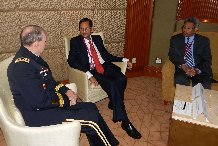
On the margins of the Shangri-La Dialogue, Sri Lanka’s delegation to the meetings led by the Minister of External Affairs and Secretary Defence Mr Gotabhaya Rajapaksa met with General Martin Dempsey US – Chairman of the Joint Chiefs of Staff and A K Anthony the Defence Minister of India. Prof Peiris gave an in depth account of implementing a locally chartered course of action for national reconciliation which also included elements of rehabilitation, reconstruction and the socio-economic development of the conflict affected Northern and Eastern parts of the country. Both USA and India commended the incremental and steady progress being made in these areas and were keen to assist Sri Lanka in all aspects of their multifaceted bilateral partnership for attaining sustainable peace. As a coastal nation, the meetings recognized the pivotal role that Sri Lanka navy could play in strengthening the security of sea lanes in the Indian Ocean and resolved to co-operate closely in drawing on their synergies in combating international terrorism. As two key strategic partners of Sri Lanka, both the USA and India responded positively to a request made by Secretary of Defence for enhanced training opportunities for capacity building of defence personnel in their institutes of repute. Prof Peiris addressed a thematic Session on “South Asia’s Growing Security Threats” in the Asian Security Summit, in Singapore. Among his fellow panellists was Dr Dipu Moni, Minister of Foreign Affairs of Bangladesh.
Ministry of External Affairs
Colombo.
5 June 2012
 Important Links


